
First-Time Land Buyers: Everything You Need to Know Before Investing
August 5, 2026
Joint Land Ownership: How to Buy Property with Friends or Family Without Conflict
August 20, 2026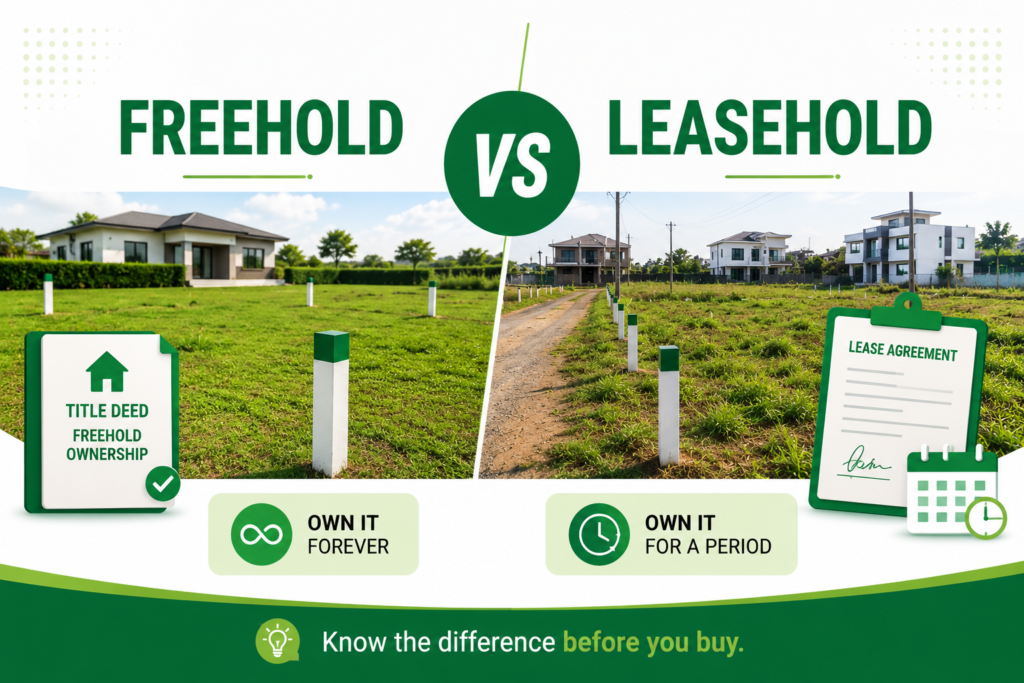
Freehold vs Leasehold is an important distinction to understand before purchasing land in Kenya. While both are recognised forms of land tenure, they give landowners different rights and involve different conditions.
The Constitution of Kenya recognises both freehold and leasehold interests as forms of private land ownership. The Land Act also recognises freehold and leasehold as forms of land tenure.
So, what exactly is the difference?
1. Freehold Land Gives You Long-Term Ownership
Freehold tenure generally provides ownership of the land without a fixed expiry date attached to the tenure itself.
This can make freehold property attractive to buyers looking for long-term ownership and an asset they can retain for many years or pass on to future generations.
However, freehold ownership does not mean that the property is exempt from laws, planning requirements, rates, restrictions, or other applicable obligations.
The specific rights and conditions attached to a property should always be confirmed through the official land records and relevant documents.
2. Leasehold Land Has a Defined Term
Leasehold ownership gives a person rights to use and occupy land for a specified period under the terms of a lease.
The lease document should clearly indicate important details such as the duration and conditions of the lease.
When purchasing leasehold property, buyers should therefore pay close attention to the remaining lease period, rather than looking only at the purchase price.
Kenya’s State Department for Lands provides processes for registering leases, sub-leases, and lease extensions, demonstrating that leasehold interests are formally documented and managed through the land administration system.
3. Leasehold Properties May Involve Land Rent
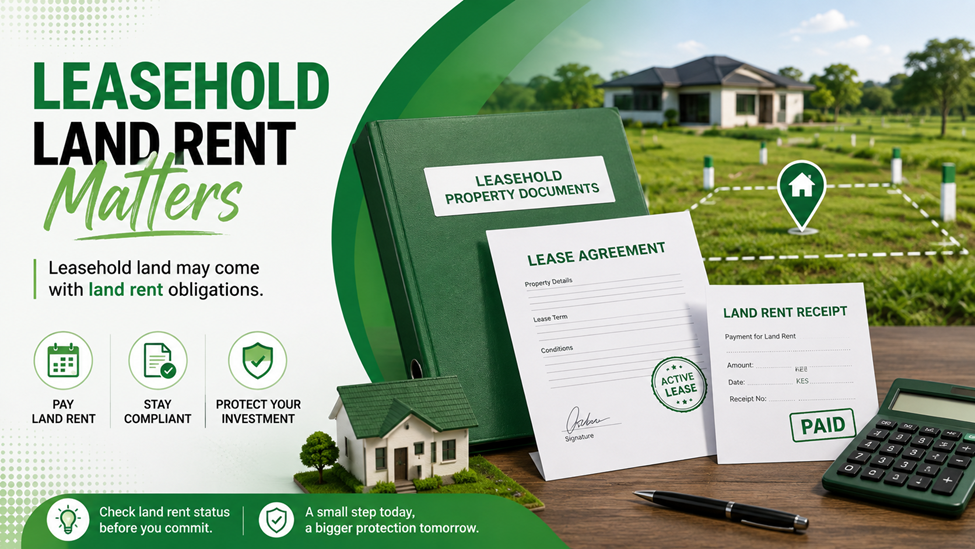
One important consideration with leasehold property is land rent.
Depending on the property and the applicable tenure arrangements, land rent obligations may need to be considered when purchasing or transferring leasehold land.
The State Department for Lands, for example, lists rent clearance among requirements for certain land transactions involving leasehold property.
Before buying, ask whether there are outstanding land rent obligations and confirm the property’s current status through the appropriate official records.
4. The Remaining Lease Period Matters
If you are considering leasehold land, do not simply ask:
“How much does the land cost?”
Also ask:
“How many years remain on the lease?”
A property with a long remaining lease period may present a very different situation from one approaching the end of its lease.
Lease extensions are possible through the relevant legal and administrative processes, but buyers should not assume that an extension would happen automatically.
The State Department for Lands has a specific process for approval of lease extensions.
This makes checking the lease term an important part of your due diligence.
5. Both Tenures Can Be Used for Investment
It is a mistake to assume that freehold automatically means “good investment” while leasehold automatically means “bad investment”.
Both types of tenure can be associated with valuable property.
The property’s location, accessibility, permitted use, development potential, market demand, documentation, and overall condition can all influence its investment potential.
For example, a well-located leasehold property with strong development potential may be more attractive than a poorly located freehold property.
The tenure is important, but it should be considered alongside the wider characteristics of the property.
6. Non-Citizens Have Different Landholding Rules
For buyers who are not Kenyan citizens, tenure becomes particularly important.
Article 65 of the Constitution provides that a non-citizen may hold land only on leasehold tenure, with the lease not exceeding 99 years.
This means citizenship status should be considered when assessing land ownership options in Kenya.
Anyone in this situation should obtain professional legal advice before entering into a transaction.

7. Always Verify the Tenure Before Buying
Whether you are considering freehold or leasehold property, do not rely solely on what a seller or advertisement says.
Before making a commitment, confirm the property’s tenure through the relevant official documentation and land records.
You should also:
- Conduct an official land search.
- Verify the registered owner.
- Check the title or certificate of lease.
- Confirm any charges, restrictions, or cautions.
- For leasehold property, check the remaining lease period.
- Check applicable land rent obligations.
- Visit the property physically.
- Confirm the property’s boundaries and access.
- Seek professional legal advice where necessary.
An official land search can help verify important information about the registered property. The State Department for Lands currently lists the issuance of a search certificate as an official land-registration service.
Which Is Better: Freehold or Leasehold?
There is not one answer that applies to every buyer.
Freehold may appeal to someone looking for long-term ownership without a fixed lease expiry, while leasehold can provide valuable rights to use and develop property for the duration and under the conditions of the lease.
The better option depends on your investment goals, location, intended use, budget, remaining lease period, and the specific terms attached to the property.
Instead of choosing a property simply because it is labelled freehold or leasehold, take time to understand exactly what you are buying.
The most important thing is not simply choosing one tenure over another. It is making sure that the property is properly documented, the ownership information is clear, and the terms attached to the land are suitable for your plans.
Whether you are buying your first plot or expanding your property portfolio, proper research and professional guidance can help you make a more confident decision. That is why Understanding Freehold vs Leasehold can make the land-buying process much easier and help you ask better questions before committing your money.
Looking for a property with clear documentation and professional guidance? Northwise Properties Limited can help you explore land opportunities while guiding you through the buying process.